

ResumeBench
Quick links: [Website] [Code & CLI] [Careerflow]
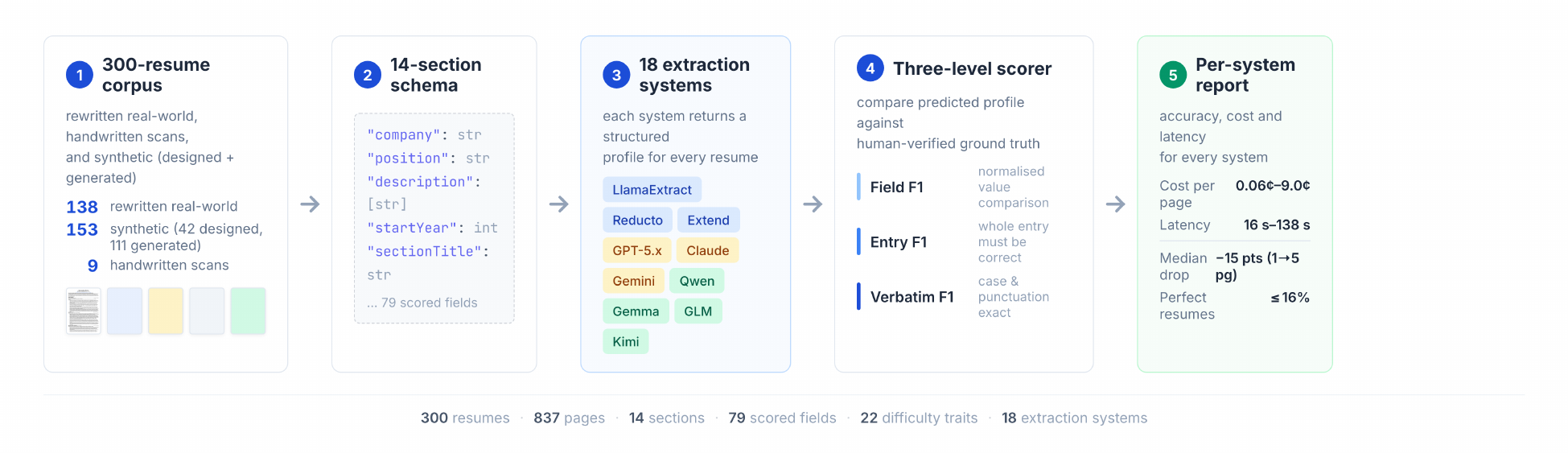
Given a resume PDF and a 14-section JSON Schema, a system returns structured data that matches the source document. ResumeBench measures how accurately extraction systems perform this task across 300 curated real-world, handwritten, and adversarial resumes.
Resume parsers drive job matching, candidate screening, and career tools. Extraction errors propagate. ResumeBench measures accuracy at the field level and penalizes both omissions and hallucinations. Scoring is deterministic with no LLM judge.
The evaluation framework runs pipelines and reports scores by split, tag, and system. 20 documents are released publicly; to access the full benchmark (300 curated resumes), request access.
Dataset
ResumeBench contains 300 curated resumes (837 pages). Each document is tagged by source, difficulty, and layout traits.
| Source | Documents | Pages | Description |
|---|---|---|---|
| Real-world | 138 | 367 | Anonymized resumes via Careerflow |
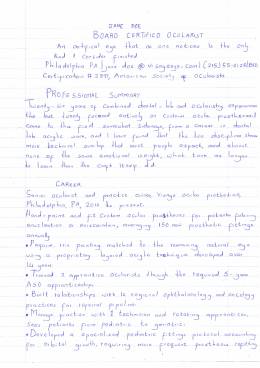
| Handwritten | 9 | 42 | Handwritten resumes on paper |
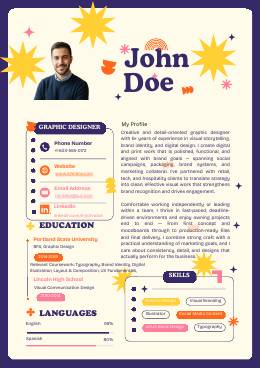
| Synthetic | 153 | 428 | Expert-built (Canva, LaTeX, Overleaf) and generated resumes with deliberate parsing challenges |
| Total | 300 | 837 |
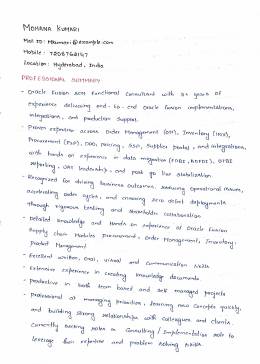
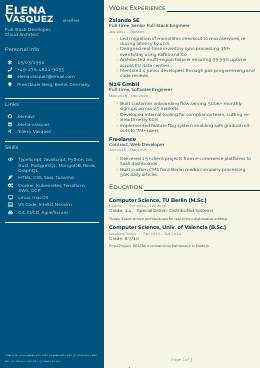
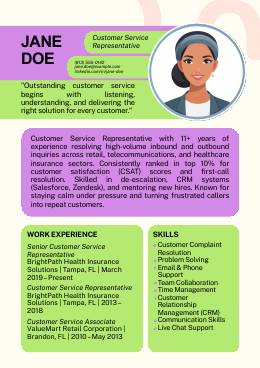
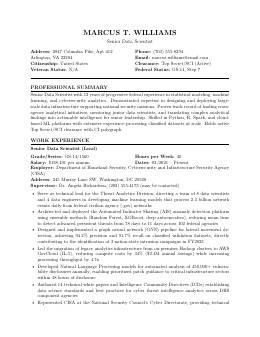
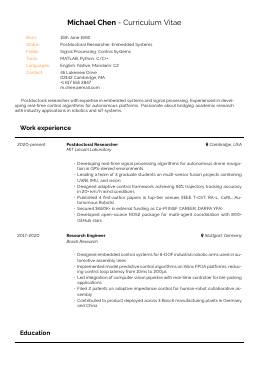
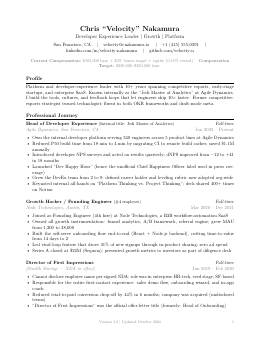
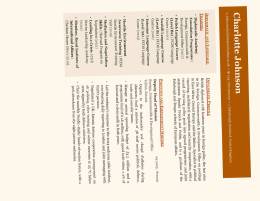
The benchmark spans a range of difficulty challenges: multi-column and sidebar layouts, handwritten resumes, custom sections (bar admissions, military service, publications), adversarial text (name-skill collisions, contradictory dates), and scanned or rotated documents.
Document Gallery
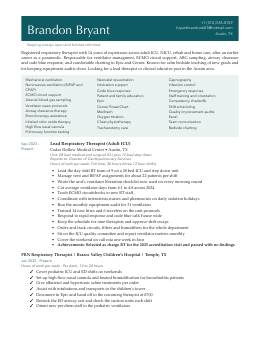
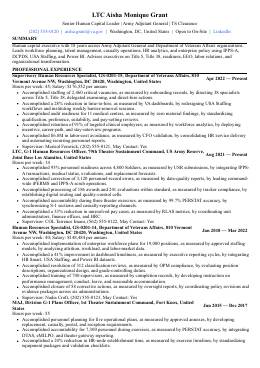
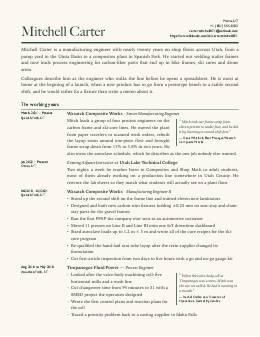
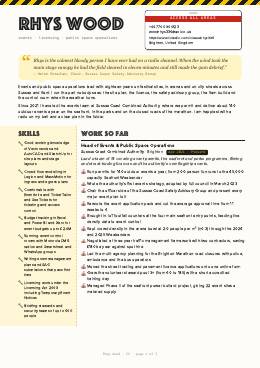
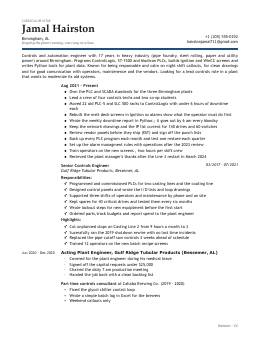
Everyday resumes
 |
 |
 |
 |
 |
 |
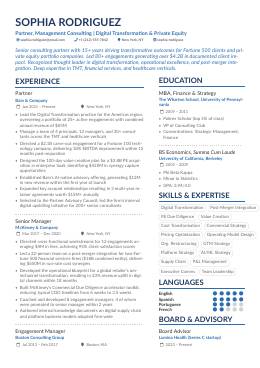
Designed templates (Canva, LaTeX, Overleaf)
 |
 |
 |
 |
 |
 |
Specialized & adversarial
 |
 |
 |
 |
 |
 |
Leaderboard
300 curated resumes, 18 systems. Every system receives the identical PDF, the same 14-section JSON Schema, and the same extraction prompt. The F1 column is Field F1 (the primary metric), macro-averaged across sections per document, then across documents. Scores are percentages.
| Rank | System | Type | F1 | Cost/page | Latency |
|---|---|---|---|---|---|
| 1 | LlamaParse Extract Agentic Plus | API | 87.1572 | $0.054 | 69.7s |
| 2 | Reducto Deep Extract | API | 85.5526 | $0.040 | 64.8s |
| 3 | LlamaParse Extract Agentic | API | 85.5463 | $0.023 | 54.6s |
| 4 | Claude Opus 4.8 | LLM | 85.5052 | $0.090 | 31.3s |
| 5 | Gemini 3.5 Flash | LLM | 85.4518 | $0.035 | 42.8s |
| 6 | GPT-5.6 | LLM | 84.7483 | $0.060 | 38.5s |
| 7 | Extend Max Context | API | 84.7241 | $0.030 | 45.2s |
| 8 | Qwen 3.8 Flash | LLM | 83.5181 | $0.004 | 22.1s |
| 9 | Qwen 3.8 27B | LLM | 83.7681 | $0.003 | 18.6s |
| 10 | LlamaParse Extract Cost-Effective | API | 83.5164 | $0.009 | 32.4s |
| 11 | GPT-5.5 | LLM | 83.5022 | $0.045 | 35.2s |
| 12 | Reducto Extract | API | 81.6959 | $0.020 | 28.3s |
| 13 | Extend Extract | API | 80.9701 | $0.015 | 33.1s |
| 14 | Qwen 3.5 35B | LLM | 77.9481 | $0.002 | 15.8s |
| 15 | Qwen 3.5 9B | LLM | 75.7778 | $0.001 | 10.2s |
| 16 | Gemma 4 26B | LLM | 62.8207 | $0.003 | 19.4s |
| 17 | GPT-5.4 Nano | LLM | 61.8600 | $0.008 | 12.5s |
| 18 | GLM 5.3 Flash | LLM | 58.8454 | $0.002 | 14.3s |
Per-section breakdowns, difficulty splits, and interactive filtering at resumebench.ai.
Metric details
- F1: F1 of extracted values, macro-averaged across sections per document, then averaged across documents.
- Identity-gated matching: Entities in structured sections are matched by identity fields (e.g. company + position + startYear + endYear for experience). All identity fields must match before the entity pair is scored. Keyword sections (languages, interests, profiles, publications) use Hungarian alignment.
- String comparison: Whitespace collapsing. Case and punctuation count. Typographic variants (smart quotes, em dashes, soft hyphens) are folded to ASCII equivalents. Contacts and locations are compared case-insensitively.
- Description bullets: Compared positionally (bullet[0] vs bullet[0], etc.) using normalized edit distance. Missing or extra bullets score zero.
- Failed documents: Score zero (not dropped), so a system can't boost its average by erroring on hard ones.
- Cost/page: USD per page at each provider's official public pricing.
- Latency: Wall-clock seconds per resume (median).
- Type: API = document extraction service (ingests schema natively); LLM = vision language model (receives rendered pages + prompt).
Scoring
Scoring is per-field with identity-gated matching:
- Per-field units: Each field in a matched entity is scored independently. Description bullets are compared positionally (bullet[0] vs bullet[0], etc.).
- Identity-gated matching: Entities are matched by identity fields (e.g. company + position + startYear + endYear). All identity fields must match before any other field is scored. Keyword sections (languages, interests, profiles, publications) and skills use Hungarian alignment.
- Section-averaged: F1 is computed per section, then averaged. A missed custom section costs as much as a missed job.
Text comparison: strings are compared after whitespace collapsing. Typographic variants (smart quotes, curly dashes, soft hyphens) are folded to ASCII equivalents. Contacts and locations are compared case-insensitively. Failed extractions score 0, not skipped.
Usage
git clone https://github.com/careerflow/ResumeBench.git
cd ResumeBench
pip install -e ".[dev]"

# Download the dataset
resume-bench download

# Run extraction
resume-bench run openai_gpt-5.6-sol_text --split test

# Grade results
resume-bench grade openai_gpt-5.6-sol_text --split test

# View leaderboard
resume-bench leaderboard --split test
Quick smoke test (mini split, 5 resumes)
resume-bench run openai_gpt-5.6-sol_text --split mini --limit 5
resume-bench grade openai_gpt-5.6-sol_text --split mini
Dataset Format
Splits
| Split | Documents | Purpose |
|---|---|---|
test |
20 | Public evaluation set (representative subset of the full 300) |
mini |
5 | Quick smoke test (subset of test) |
Record Schema
Each line in test.jsonl / mini.jsonl:
{
  "resume_id": "009b8ddc-4d4e-4452-ba2a-cc43ef83df77",
  "files": {"pdf": "pdfs/009b8ddc-4d4e-4452-ba2a-cc43ef83df77.pdf"},
  "ground_truth": {
    "basics": {"fname": "John", "lname": "Doe", "email": "john@example.com"},
    "experience": {"sectionTitle": null, "items": [
      {"company": "Acme Corp", "position": "Engineer", "startYear": 2020, "endYear": 2023,
       "description": ["Led migration to microservices", "Reduced latency by 40%"]}
    ]},
    "education": {"sectionTitle": null, "items": [
      {"institution": "MIT", "area": "Computer Science", "studyType": "BS",
       "startYear": 2016, "endYear": 2020}
    ]},
    "skills": {"sectionTitle": null, "items": [
      {"category": "Programming", "skills": ["Python", "Go"]}
    ]},
    "personalSummary": {"sectionTitle": null, "text": "Experienced engineer with..."}
  },
  "difficulty": "medium",
  "layout_tags": ["real-anonymized", "table_grid"],
  "source": "real-anonymized",
  "domain": "software-engineering",
  "schema_version": "resume_v1"
}
14 scored sections
| Section | Type | Identity Fields | Description scored? |
|---|---|---|---|
basics |
singleton | (all scored fields) | No |
experience |
entity-list | company + position + startYear + endYear | Yes |
education |
entity-list | institution + studyType + startYear + endYear | Yes |
projects |
entity-list | name + startYear + endYear | Yes |
personalSummary |
text | text | N/A |
certifications |
entity-list | name + issuer | No |
awards |
entity-list | title | No |
volunteering |
entity-list | organization + position + startYear + endYear | Yes |
skills |
flat-list | (one unit per skill) | No |
publications |
keyword | name (Hungarian) | No |
languages |
keyword | name (Hungarian) | No |
interests |
keyword | name (Hungarian) | No |
profiles |
keyword | network (Hungarian) | No |
customSections |
entity-list | sectionTitle | Yes |
Structured sections use direct greedy matching on identity fields (all must match). Keyword sections use Hungarian alignment.
Citation
@misc{kohli2026resumebench,
  title     = {ResumeBench: A Benchmark for Structured Resume Extraction},
  author    = {Puneet Kohli and Shiv Awasthi and Jeffy Sam},
  year      = {2026},
  url       = {https://resumebench.ai}
}
Links
- Website: resumebench.ai
- Code: careerflow/ResumeBench
- Careerflow: careerflow.ai
- Downloads last month
- 1,248